
Does a Balance Transfer Affect Your Credit Score? (2026 Guide)
A balance transfer may dip your score briefly, but lowering your credit utilization can boost it fast. Here's exactly how it plays out.
Priyanka Soni
3 May 2026
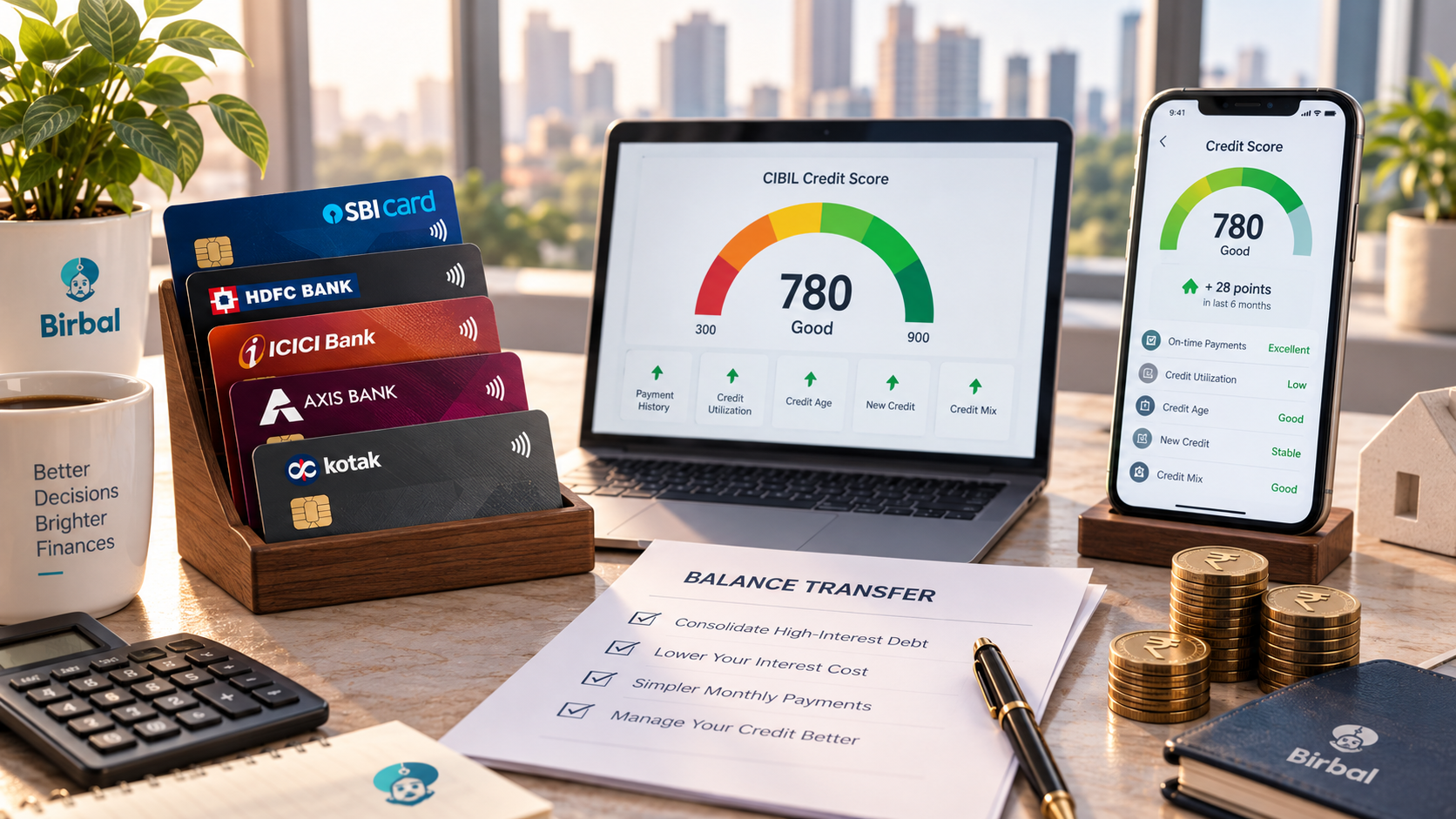
You are stuck with high-interest debt on a credit card. You want to move that balance to a personal loan or another card with a lower rate. It makes perfect financial sense.
But then you hesitate.
You worry that opening a new account or shifting debt around will look bad to the credit bureaus. You worked hard for your score (or you are trying to fix it), and you don’t want to ruin it.
I hear this concern all the time. The short answer is: Yes, your score might dip slightly when you first do it. But if you handle it right, a balance transfer is actually one of the fastest ways to increase your score in the long run.
Here is exactly how it works and what you need to watch out for.
The short-term dip explained
When you apply for a balance transfer—whether it is a new credit card or a personal loan—the bank pulls your credit report. This is called a "hard inquiry."
A hard inquiry usually knocks your score down by a few points. It is temporary. Think of it like a small bruise. It heals quickly, usually within a few months, as long as you don't go around applying for ten other loans at the same time.
Also, if you get a new credit card for the transfer, the average age of your credit accounts will drop. If you have had your old cards for 5 years and you open a brand new one, the average goes down. This also has a minor negative impact.
But don't panic. These are small factors compared to what comes next.
The long-term boost
The biggest factor in your credit score (after payment history) is your Credit Utilization Ratio. This is simply how much of your credit limit you are using.
If you have a limit of ₹1 Lakh and you have used ₹90,000, your utilization is 90%. This screams "high risk" to banks, and it drags your score down heavily.
A balance transfer can fix this overnight.
When you move that ₹90,000 debt to a personal loan, your credit card balance goes to zero. Your utilization drops from 90% to 0%. Since personal loans are "installment debt" and not "revolving debt" (like credit cards), they affect your score differently.
Suddenly, you look much less risky. Your score usually jumps up significantly, far outweighing the small dip from the hard inquiry.
Let’s look at the numbers
Imagine a guy named Rahul.
Rahul’s situation:
- Credit Card A: Limit ₹1 Lakh, Balance ₹90,000 (90% utilization).
- Credit Card B: Limit ₹50,000, Balance ₹40,000 (80% utilization).
- Total Utilization: 87% (High).
- Current CIBIL Score: 680.
The Action: Rahul takes a personal loan of ₹1.3 Lakh at 12% interest to pay off both cards.
The Result (Month 1):
- New Loan Inquiry: Score drops 5-10 points to 670.
- New Account Opened: Average credit age drops slightly.
The Result (Month 2):
- Credit Card A Balance: ₹0.
- Credit Card B Balance: ₹0.
- Total Credit Utilization: 0%.
Because his utilization crashed from 87% to 0%, his score shoots up. He might see his score cross 730 or 740 within two months, provided he pays the new loan EMI on time.
Common mistakes that ruin the plan
A balance transfer only helps if you are disciplined. Here is where people mess up.
1. Closing the old card
Once you pay off the old credit card, you might feel like cutting it up and closing the account. Don't do this.
Closing the card reduces your total available credit limit. If you close Rahul’s Card A (limit ₹1 Lakh), he loses that limit. If he spends ₹20,000 on Card B later, his utilization is calculated against a smaller total limit, which hurts the score.
Keep the old card open. Put a small recurring payment on it (like a Netflix subscription) and set up auto-pay to keep it active.
2. The "double debt" trap
This is the most dangerous mistake. You pay off your credit card using a loan. You feel relieved. Then, next month, you see that empty credit limit and think, "I can buy that new phone now."
Six months later, you have the personal loan EMI plus a new credit card bill. This will destroy your credit score and your peace of mind.
3. Ignoring the processing fee
Balance transfers aren't free. Banks often charge a processing fee (usually 1-2% of the amount) or a foreclosure charge on the new loan. Make sure the interest you save is more than these fees.
How to do it right (Step-by-step)
If you have decided to go ahead, follow this checklist to protect your score.
- Check your current score and utilization. Know exactly where you stand before applying.
- Find the right offer. Look for a low-interest personal loan or a balance transfer card with a low processing fee. Compare the Annual Percentage Rate (APR), not just the monthly interest.
- Apply for one option only. Do not apply to five banks at once "just to see." Multiple inquiries will hurt your score.
- Complete the transfer. Use the funds to pay off the old card immediately. Do not keep the cash in your savings account.
- Confirm the zero balance. Wait 3-4 days and check your old credit card app to ensure the balance is zero.
- Keep the old card active but empty. Do not close it.
- Wait 45 days. It takes time for banks to report these changes to the credit bureaus. Check your score after a month or two to see the improvement.
When this won’t help
A balance transfer isn't a magic wand. It won't help your score if:
- You have missed recent payments. If you are already defaulting, a new lender won't approve you, or they will offer a very high rate.
- You are applying for a home loan soon. If you plan to buy a house in the next 3-6 months, avoid opening new credit lines. Lenders like stability, not new debt shuffling.
What to do next
Don't let the fear of a small, temporary score drop stop you from saving money. If you are paying 36-42% interest on a credit card, getting out of that trap is your priority.
Sit down today and calculate your total credit card debt. If it is more than 30% of your limit, a balance transfer is likely a smart move for both your wallet and your credit score.
Frequently asked questions
Curious what this means for your loan?
Get a free, no-pressure savings report in about 60 seconds.